25 September 2008

Shame on you Dr Jack Phillips!! Give us back our Town!!

I live in a small town. Its almost at the very bottom of New Zealand on the main road between North and the little bit of South that is left before you hit the sea.

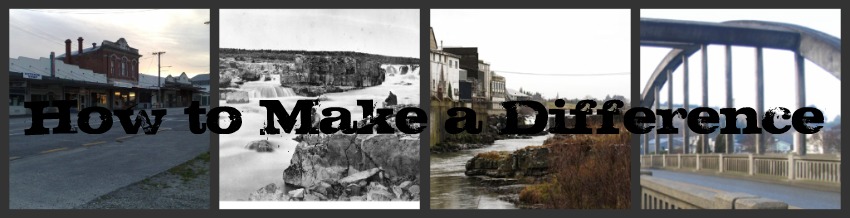
We are on the edge of what is a beautiful river. Unfortunately in the 1800's someone got the great idea to build an abattoir and a paper mill along side of the river (and blast the impressive Mataura Falls to oblivion while they were at it). So Mataura is a working class town, definately more industrial than picturesque.

In the past it has been a very important town - it had the only bridge across the river for miles around. Then they built the railway on 'the other' side of the river and our bridge didn't matter so much anymore.

But the Mill and the Abattoir kept the town humming. They both employed a lot of people. We had our own council and a main street full of busy shops.

Then 8 years ago the Mill closed (the work went overseas) and the town died. The people just gave up, they abandoned homes and businesses. The community spirit died too. The council amalgamated with Gore, a nearby town and Mataura no longer runs its own affairs.

An American investor, a retired dentist by the name of Dr Jack Phillips, who owned properities in beautiful Queenstown and in Gore, took the opportunity to buy the town centre. He owns all but a few of the commercial buildings in our main street. He owns the cinema, he owns the squash club, he owns a church, a masonic lodge building and all are unused. He brought them cheap from people who saw no future for themselves after a devastating and unforseen loss of industry and jobs. Apparently he has a vision for our town.

So far it seems to involve a deserted main street of increasingly dilapidated buildings and charging rents for said neglected buildings that are more in keeping with those charged in a busy urban centre. In fact, thus far it seems to involve actively discouraging potential businesses from starting up in Mataura.

Dr Jack Phillips does not live in New Zealand (that's ok - lots of people don't its not their fault!) and he does not live in Mataura. He comes here for a couple of weeks each year (I believe that is a requirement of holding property in this country if you are a foreign national) to oversee his investments.

His 2008 visit has just drawn to a close and he has finally let us in on what his grand vision for our town actually is. He plans to turn Mataura into a boutique town, with art galleries and antique stores. Sounds lovely? How many boutique towns do you know with a freezing works as the focal point?

Mataura is a town with a lot of social problems. People here are poor. We have the most needy school in the whole of Southland - kids turn up to school with no breakfast. Illiteracy is a BIG issue in our town. So is alcoholism and despair. People in Mataura do not need art galleries and antique stores. We need a green grocer, a dentist, a cafe, a hair dresser, recreational facilities to keep the kids off the streets, a bakery. We need practical stuff.

The Squash Club could be up and running - it is a relatively new building and when last used was all in good repair. But Jack Phillips wants to turn it into a gym, so we miss out. The Movie Theatre has all it needs to be operational and could run quite nicely as a small town theatre. But Dr Jack Phillips wants to turn that into an art studio, so once again we miss out.

His vision for our town has not been formed in consultation with the people that live here. In fact if it were to go ahead, many of the people that live here now would not be able to afford to stay. Where are they supposed to go? Many of them have lived here all their lives.

How can a foreign investor, who does not live in New Zealand, let alone in Mataura, come to own the majority of this small town and decide unilaterally what the direction of our community is to be?

SHAME ON YOU Dr. JACK PHILLIPS!!! GIVE US BACK OUR TOWN!!!

post signature

Reblog this post [with Zemanta]

20 September 2008

September Update from SALVEASERRA

Project 1911 update. September 2008. Things are growing, plants and ideas.

By Roberto Lamego - Director, September 17, 2008 05:22 PM

Dear donors and Project friends.

I am glad to say that the “Trees and Education Protect Rainforest in Brazil” project is running smoothly and that the plants and the ideas are growing steadily. I feel that slowly people are beginning to understand and to be more aware of the gravity of the local environmental and water situation that is taking hundreds of rural families out of their land into the cities and some to misery, poverty and crime.
The agroforestry trees in the new planted areas and the coffee plantations are now irrigated with a recently installed system that brings water from the mountain stream. Please see pictures of palm trees plantation and of irrigation of coffee plants.

School groups are visiting the Concordia Mountain Wildlife Sanctuary to spend their day in the forest and also to learn about Agroforestry technology at our Agroforestry Education Center, as did this last group of 34 students that came from a regional Agricultural State School to visit us. This “Day in the Forest” activity was sponsored by the SALVEASERRA/GLOBALGIVING Fund. See project 2239 for fund explanation and the pictures of this students group visit in Photo Gallery.

It is important to say that the project for the donation of irrigated vegetable gardens we started in the beginning of this year was separated from this one and now is on the list of GlobalGiving projects with the title: Provide Vegetable Gardens for Families in Brazil, project 2239.

Thank you all for your support and donations.

Roberto Lamego, director

Visit SALVEASERRA at GlobalGiving to read more about their project and to donate and support their good work.

You can also support them by purchasing an awesome, organic cotton t-shirt from We Add Up. I will donate 10% of the price of each t-shirt sold to SALVEASERRA. Click here to purchase now.

Or, you can help raise funds at no cost to you by downloading and using the marvellous How to Make a Difference toolbar from Conduit. Click here to download now.

post signature
Reblog this post [with Zemanta]

18 September 2008

5 Ways to be Generous in Tough Economic Times

A small vegetable garden in May outside of Aus...Image via WikipediaWith prices rising and the fear of deepening recession over our heads, its easy to justify a little selfishness. Its hard enough to look after our own families in these times of doubt, let alone trying to help anyone else, right?

Our communities have become so fragmented, and people are so busy with their individual concerns, that quite often they don't even know their neighbours, let alone know how they are coping in the current uncertain economic climate.

But for our Communities to come out of this better off, we all need to give a little - or even a lot. And I'm not talking money here. Peruse the list below for ideas on how you can give even when times are tough!

1. Got a Green Thumb?
If you already have a vegetable garden, consider growing extra to donate to the local foodbank or to families you know that are in need. You could donate your expertise to help start a community garden or teach your neighbours how to grow their own food. You could organise for everyone in your street to grow a different vegetable and share amongst yourselves.

Read more about growing your own vegetables in pots here. Find out about creating your own Urban Homestead here.


2. Be Kind
Be thoughtful, try not to judge. Nobody in financial trouble specifically chose that outcome. They probably made choices along the way that made it more likely, but I doubt they woke up one morning and decided they wanted to be a statistic in the next recession.

Many people are afraid at the moment. Afraid they may lose their jobs, their businesses, the things they have worked hard to accumulate. Bear this in mind during your dealings with others and be kind.

Read more about the importance of remembering to be kind here.
Check out Operation NICE's beautiful NICE Tip Cards here.

3. Are You Good with Money?
Personal Financial Management skills are sadly lacking for many people these days, and frugal living is only just coming back into fashion. If you have budgeting and frugal living down to a fine art, offer your services to others in your community. You could work with individuals, or offer classes in the evenings or weekends.

4.
Got Skills?
Are there people in your community that need things done but can't afford to pay? If you've got the skills to help them out, then be generous with your time and offer your services for free. It could be anything from advocacy to yardwork, car repairs to home maintenance. You could even set up some sort of Time Bank or barter system.

Read more about Time Banking here.

5. Be a Good Neighbour
Support you neighbourhood. Shop locally wherever possible - it saves you money on petrol and it saves you time because you don't have to go as far. Shopping locally keeps money and jobs in your community (in comparison, when you shop at the supermarket about 80% of your spend leaves the community), and a thriving neighbourhood keeps your property values up!

Read more about building a strong neighbourhood here.


post signature

Reblog this post [with Zemanta]

15 September 2008

What Were You Thinking MTV?

"On September 17, MTV is getting ready to show off a new reality show called “Real World/Road Rules Challenge: The Island“. Much like Survivor, it’s supposed to show a bunch of people “roughing it” while completing tasks, acting like asses, and other dramatic moments.

As one would expect, the real “reality” is much less exciting. In fact, as was recently reported by Michael Drake on the Tree Climber’s Coalition site, not only is the show basically scripted and shot in and around civilization, but it also appears to have done a good deal of environmental damage. Drake, along with others living on Boca del Drago Island in the Republic of Panama witnessed MTV clear a large section of rainforest for the set construction. In addition, they also trashed a pristine beach, disturbed a bird sanctuary island “off-limits” to human visitations, and left behind an insane amount of garbage, set debris, and refuse."

Read the rest of the article at Ecorazzi

post signature

Reblog this post [with Zemanta]

12 September 2008

The Joy of Nice

One of the easiest and most effective ways of making a difference is to make a conscious effort to be nice as you go about your daily life.

I like to think I'm pretty nice, well at least most of the time, as I'm sure all of us do. I recently discovered Operation NICE - well, actually Melissa of Operation NICE recently discovered me - and now I've been inspired to break out of my comfort zone and be even nicer to the people I encounter in my day.

As Melissa says "A little NICE goes a long way" - so head on over to Operation NICE and check out 5 Ways to Make the World a Kinder Place for inspiration.


post signature

Reblog this post [with Zemanta]

07 September 2008

5 Ways to be More Resiliant

Laughter by David ShankboneImage via Wikipedia Lets face it, life is full of stresses and difficulties. Its not easy to make it from one day to the next without some sort of stressful situation rearing its ugly head.

If you don't learn to handle stress in a positive way, you increase your chances of suffering from all manner of health problems - anything from heart disease, and obesity to anxiety, depression and infection. Not to mention the fact that you probably aren't much fun to be around!!

1. Exercise
Nothing beats working up a sweat for helping beat stress! And keeping yourself fit and healthy helps your body counteract the effects of stress.

2. Dwell on the Positives
Take the time to remind yourself of the good stuff you have going on in your life - and remember to include your own skills and positive qualities. Don't let negative self-talk take over. Make a point of not saying anything to yourself that you wouldn't say to your kids (or your mother, or dog . . . )

3. Be More Assertive
Learn to say 'No'. Set boundries and stick to them. Deal with issues before they become problems. In other words, take control of your life.

4. Express Yourself
Talk about how you feel with a trusted confident or counsellor. Be upfront with people who are adding to your stress (in a polite, respectful way of course!). You don't have to pretend everything is ok!

5. Laugh
Nurture your sense of humour - especially in times of stress. Laughter reduces levels of certain stress hormones, can help boost your immune system and its a pretty good aerobic workout. So go on, have a good giggle!!

post signature

Reblog this post [with Zemanta]

01 September 2008

5 Reasons to embrace the F-word

Tenzin Gyatso, the fourteenth and current Dala...Image via Wikipedia Forgiveness isn't something that gets a lot of air time in the popular press. In fact, its often treated as an oddity, something to be admired in others but not necessarily practised by your average individual.

A growing field of research, however, is finding that forgiveness is an important process for us all to embrace as part of our everyday life.

“Why is compassion so important?
Someone must take the initiative to move beyond the cycle of old choices and responses that brings more pain and suffering and recognize the opportunity for a healing response to life itself. This is also true of the forgiveness that results from a compassionate heart. Today we face many problems, and the time has come for us to think on a deeper human level where we understand and respect the humanness of everyone. Though we might regard someone as an enemy, this enemy is also a human being who is trapped by his or her own demons and who has a right to happiness.”
—His Holiness, The Dalai Lama


If this isn't enough to convince you, take a look at these 5 reasons to forgive those who done you wrong:

1. Its good for you
Forgiveness can contribute to your health and happiness. It lowers blood pressure and reduces stress. It reduces depression and anxiety symptoms.

2. Its good for your relationships
If you make forgiveness a part of your life, you will become less hostile and more hopeful. You are likely to attract more friends, and have better relationships. Forgiveness is one of the foundations of a long lasting, healthy marriage/partnership and a strong, happy, loving family.

3. It makes you a stronger person
Forgiveness is not easy. It is not a sign of weakness, but a sign of great personal strength. By choosing not to forgive, you choose to remain the victim. By forgiving, you are not condoning the offense or hurt, or even reconciling with the person who hurt you. What you are doing is freeing yourself to move on past the pain and resentment.

4. Its an opportunity for transformation
Forgiveness allows individuals and whole nations to heal. It reduces hostility and ends emotional and mental anguish. It can stop the cycle of hatred and hurt that stymies efforts for peace.

5. Holding grudges is like eating rat poison and waiting for the rat to die
In other words its painful, unpleasant, takes up a lot of energy and is essentially pointless. By letting go, you free up all that energy and can focus it on more positive pursuits as you continue your life's journey.

post signature

Reblog this post [with Zemanta]